Theme: “Inspired by Nature. For Climate. For Our Future”
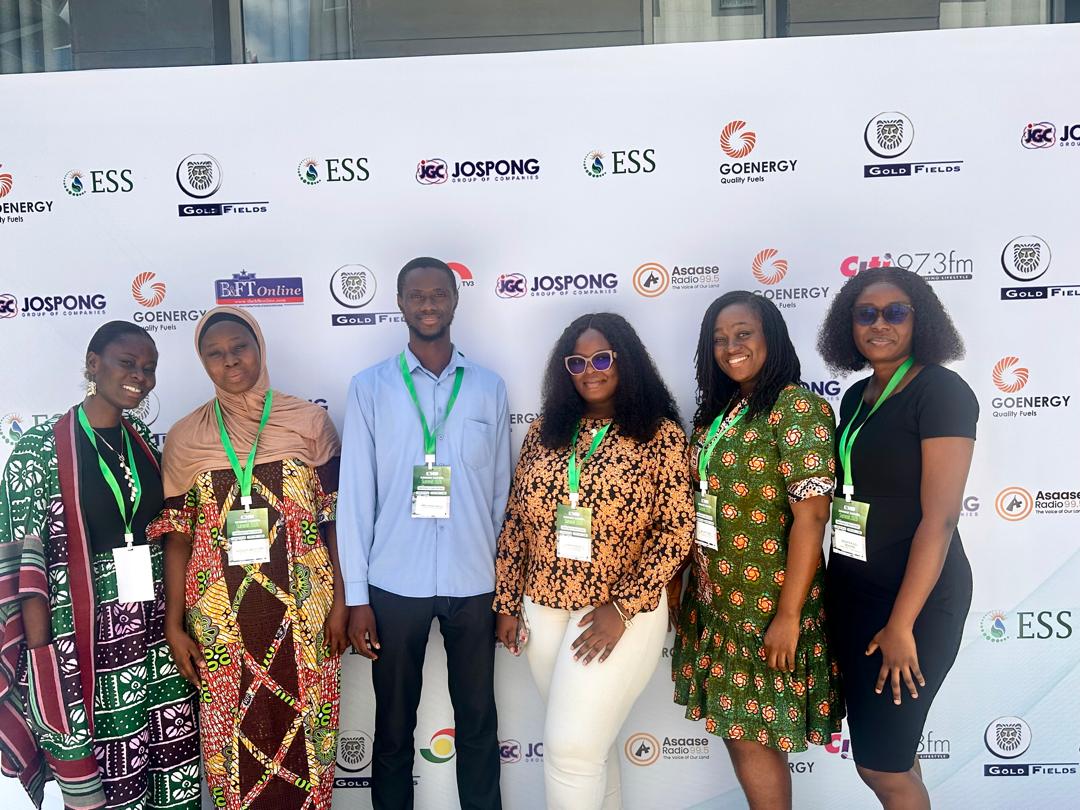
The Business and Financial Times (B&FT) Environmental Sustainability Summit, organized to commemorate World Earth Day 2026, convened policymakers, industry leaders, researchers, development practitioners, and sustainability advocates to explore practical solutions for addressing environmental and climate challenges through nature-inspired and sustainable approaches. The summit was attended by a Postdoctoral Research Fellow (PDRF) and five MPhil students from the Institute for Environment and Sanitation Studies (IESS), University of Ghana, providing an important opportunity for learning, networking, and engagement with current sustainability discourse in Ghana.
Overview of Discussions
The summit centered on the role of nature-based and sustainability-driven solutions in addressing climate change while promoting economic growth and environmental stewardship. Discussions focused on how environmental sustainability can be mainstreamed across sectors through innovation, governance, financing, and community participation. A notable presentation provided an overview of Environmental, Social, and Governance (ESG) practices within the mining sector, highlighting efforts by Gold Fields in biodiversity monitoring, environmental reporting, and sustainable resource management. While progress has been made in environmental and social performance, participants emphasized the need to strengthen governance systems to ensure transparency, accountability, and long-term sustainability. The concept of a circular economy featured prominently throughout the discussions. Speakers advocated for resource efficiency, waste reduction, recycling, and sustainable production systems as critical pathways for reducing environmental degradation and fostering green growth. Biodiversity conservation and monitoring were also identified as key elements in maintaining ecosystem services and supporting climate resilience.
Climate Action, Green Economy and Sustainable Finance
A major focus of the summit was the transition toward a green economy and the financing mechanisms required to support this transformation. Participants highlighted the importance of green budgeting and sustainable investment frameworks that not only contribute to environmental protection but also create economic opportunities and reduce long-term risks. Discussions acknowledged that Africa contributes approximately 3% of global greenhouse gas emissions, yet experiences some of the most severe climate impacts. This reality reinforced the need for climate adaptation and resilience-building measures alongside mitigation efforts. Participants stressed that sustainability initiatives should be scalable, economically viable, and capable of generating benefits for both people and the environment.
Key Lessons for the IESS Delegation
For the PDRF and MPhil students from IESS, the summit provided valuable insights that align closely with ongoing research and policy work in climate adaptation, environmental governance, and nature-based solutions. Key takeaways included: - The growing importance of ESG frameworks in sustainable development. - The need to strengthen governance as a critical pillar of sustainability. - The role of circular economy approaches in achieving resource efficiency. - The importance of biodiversity monitoring and ecosystem conservation. - The value of evidence-based research in informing policy and practice. - The need to invest in community resilience and climate adaptation. - The importance of mainstreaming sustainability into everyday environments and decision-making processes. Reflections from the IESS Delegation: Beyond the Discussions While the summit focused on environmental sustainability, green growth, ESG frameworks, circular economy approaches, and community resilience, participation in the discussions prompted broader reflections on some underlying issues that are often overlooked but remain critical to achieving long-term sustainability outcomes. One such issue is the financing of environmental and sustainability research. Effective policies, investments, and interventions depend on the availability of reliable data and scientific evidence. Yet, the generation of such evidence requires sustained investment in research, environmental monitoring, data management systems, and capacity building. Without adequate support for these foundational activities, decision-makers may lack the information needed to design, implement, and evaluate sustainability initiatives effectively. For research institutions such as the Institute for Environment and Sanitation Studies (IESS), this presents an important consideration. As governments and organizations invest in climate adaptation, biodiversity conservation, and environmental restoration, equal attention should be given to supporting the research and data systems that inform these actions. Evidence generation should not be viewed as a supplementary activity but rather as a prerequisite for effective environmental governance and sustainable development. The summit therefore served as a reminder that achieving a sustainable future requires not only innovative solutions and investments in implementation, but also investments in the knowledge systems that guide those solutions. Food for Thought ''As Ghana pursues green growth and climate resilience, are we investing enough in the scientific evidence and environmental data systems needed to inform sustainable policies, guide investments, and measure progress toward a more resilient future?''
Conclusion
The B&FT Environmental Sustainability Summit reaffirmed the importance of drawing inspiration from nature to address climate challenges and secure a sustainable future. The discussions highlighted that achieving environmental sustainability requires collaborative action across government, academia, industry, and communities. Through stronger governance, innovative financing, and community engagement, Ghana can accelerate its transition toward a climate-resilient and environmentally sustainable future. The participation of the IESS delegation contributed to strengthening the University of Ghana's engagement in national sustainability conversations and provided valuable knowledge that can inform future research, teaching, and policy initiatives.