Prof. Christopher Gordon
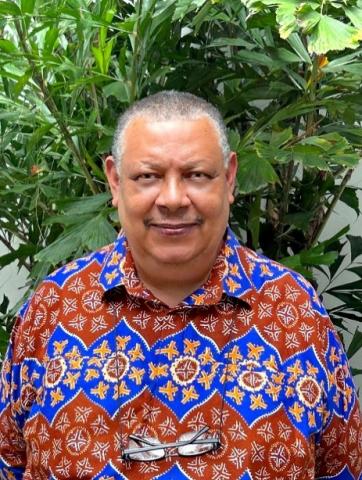
Associate Professor & Founding Director
Professor Christopher Gordon is the Founding Director of the Institute for Environment and Sanitation Studies (IESS) at the University of Ghana. He holds a PhD in Human Environmental Sciences from King’s College London, an MSc in Zoology (Freshwater Ecology) and a BSc in Zoology from the University of Ghana, along with a Postgraduate Certificate in Limnology from the UNESCO/Austrian Academy of Sciences.
His research focuses on freshwater and coastal ecosystem dynamics, biodiversity conservation, and environmental policy development. With over three decades of experience, Prof. Gordon has contributed extensively to national and international environmental frameworks, including Ghana’s National Environmental Action Plan, Wetlands Conservation Strategy, Climate Change Policy, and the country’s Intended Nationally Determined Contributions under the Paris Agreement.
He has worked with global institutions such as UNEP, FAO, UNDP, DFID, DANIDA, and the Ramsar Convention, and has served as a Coordinating Lead Author for the IPBES Africa Assessment and a reviewer for the IPCC. His expertise spans limnology, aquatic resource management, and ecosystem-based adaptation, with a strong emphasis on integrating science into policy.
Prof. Gordon has published widely on freshwater biodiversity, wetland ecology, and climate resilience, and continues to mentor graduate researchers across disciplines. In recognition of his contributions to environmental science and policy, he was invested as a Member of the Order of the Volta in 2016. He remains committed to advancing sustainable development and environmental stewardship across Africa and globally, and to bridging educational gaps by going beyond conventional models—co-creating knowledge with communities, building youth capacity, and using citizen science and digital tools to democratize climate information and practice.
Research Areas
- Freshwater & wetland ecology: Limnology, estuarine/lagoons dynamics, biodiversity, ecosystem functioning.
- Water quality, pollution & ecotoxicology: Heavy metals, pesticides/POPs, emerging contaminants (e.g., microplastics), risk and food-safety implications.
- Climate change, vulnerability & adaptation: Ecosystem-based and nature-based solutions, urban/coastal resilience, integration of science into policy.
- Environmental governance & sustainability science: Science–policy interface, Earth system governance, SDGs, climate services.
- Ecosystem services & resource management: Wetlands, rivers, reservoirs and fisheries/aquaculture environmental quality; livelihood links.
- Integrated water resources management: Catchment/river-basin planning (e.g., Volta), dam operations and downstream socio-ecological impacts.
- Monitoring, assessment & decision support: Long-term environmental monitoring, indices/metrics, EIA/SEA and risk assessment.
- Coastal socio-ecological change: Shoreline change, mangrove dynamics, and land–water pressures (e.g., small-scale mining, e-waste).
Recent Publications
- Kumah, J., Doe, E. K., Fosu-Mensah, B. Y., Ofori, B. D., Kwawu, M. A. S., Boahen, E., Lartey, D. L., Dordaa, S. D. D. P., & Gordon, C. (2025). The impact of high urban temperatures on pesticide residues accumulation in vegetables grown in the Greater Accra Metropolitan Area of Ghana. Journal of Xenobiotics, 15(4), 103. https://doi.org/10.3390/jox15040103, PubMed Central
- Ansah, E., Gordon, C., Bartell, S. E., & Schoenfuss, H. L. (2025). Demographics, insufficient wastewater infrastructure, and electronic waste recycling imperil urban tropical rivers. Environmental Toxicology and Chemistry. Advance online publication. https://doi.org/10.1093/etojnl/vgaf171
- Adarkwah, F., Awuni, S., Hájek, M., Kübler, D., Mattah, M., Gordon, C., & Owusu, E. H. (2024). Modelling the drivers of land use and land cover change of the Great Amanzule wetland ecosystem to inform the development policy of the southwestern oil-rich region of Ghana. Heliyon, 10(17), e36635. https://doi.org/10.1016/j.heliyon.2024.e36635
- Lente, I., Heve, W. K., Owusu-Twum, M. Y., Gordon, C., Opoku, P., Nukpezah, D., & Thompson-Hall, M. (2024). Vulnerabilities of smallholder farmers’ livelihoods and adaptations to climate change and variability in semi-arid northwestern Ghana: Observations and perspectives. Sustainability and Climate Change, 17(2), 141–158. https://doi.org/10.1089/scc.2023.0109
- Chapman, D. V., Gordon, C., & Sullivan, T. (2024). Editorial: Water quality monitoring and sustainable use of ambient freshwaters. Frontiers in Water, 6, Article 1450912. https://doi.org/10.3389/frwa.2024.1450912
- Mahu, E., Datsomor, W. G., Folorunsho, R., Crane, R., Marchant, R., Montford, J., Boateng, M. C., Edusei Oti, M., Oguguah, M. N., & Gordon, C. (2023). Human health risk and food safety implications of microplastic consumption by fish from coastal waters of the eastern equatorial Atlantic Ocean. Food Control, 145, 109503. https://doi.org/10.1016/j.foodcont.2022.109503
- Obura, D. O., DeClerck, F., Verburg, P. H., Gupta, J., Abrams, J. F., Bai, X., Gordon, C., et al. (2023). Achieving a nature- and people-positive future. One Earth, 6(2), 105–117. https://doi.org/10.1016/j.oneear.2022.11.013
- Rockström, J., Gupta, J., Qin, D., Lade, S. J., Abrams, J. F., Andersen, L. S., ... & Zhang, X. (2023). Safe and just Earth system boundaries. Nature, 619(7968), 102-111. https://doi.org/10.1038/s41586-023-06083-8
- Smith, D. M., Gordon, C., Kittikhoun, A., Molwantwa, J., Pacheco Mollinedo, P., Romdhane, A. B., ... & McDonnell, R. (2023). Research and innovation missions to transform future water systems. Nature Water, 1(3), 219-222. https://doi.org/10.1038/s44221-023-00049-w
- Brix, H., Mahu, E., Appeaning Addo, K., Atiglo, D. Y., Adzah, S., Botwe, B. O., ... & Wichert, V. (2024, February). Co-designing Nature based Solutions to improve coastal resilience against coastal hazards in Ghana. In American Geophysical Union, Ocean Sciences Meeting (pp. RH33A-04).
Teaching Programmes
- Climate Change Vulnerability, Impact & Adaptation (MSc./M.Phil)
- Climate Change and Water (MSc./M.Phil)
- Sustainability Principles and Practices (M.Phil)
- Policy, Legislation arrangement for Environmental Sanitation (M.Phil)
- Climate Change and Water Resources (PhD)
- Environmental Management (PhD) (PhD)
- Ecosystem Approaches for Disaster, Risk Reduction (PhD)
- Emerging Environmental Issues for the 21st Century (PhD)
Recent Research Projects
- Building Capacity to Crosslink Coastal Pollution with Climate Change (BC5). Strengthens research & teaching on how coastal contamination (plastics, e-waste, mining, pesticides, nutrients) interacts with climate change to affect marine/coastal ecosystems; parallel field training and curriculum development in Ghana & Tanzania.
Partners: NTNU (Norway), University of Ghana (IESS), University of Dar es Salaam. Funder: NORHED II (Norad). NTNU+2Sailing4Science
- Heat Adaptation Benefits for Vulnerable groups In Africa (HABVIA). A controlled study testing low-cost passive home-cooling interventions in vulnerable communities (Ghana & South Africa) and measuring health/thermal outcomes.
Partners: Multi-institutional team incl. University of Ghana.
Funder: (consortium; protocol published). BioMed Central+2PubMed+2
HABVIA: Heat adaptation benefits for vulnerable groups in Africa - Grants Awarded
- DiverSea — Citizen Science & Biodiversity Monitoring (Gulf of Guinea). Uses autonomous in-situ sampling (eDNA, plankton) and citizen science to track coastal biodiversity; IESS leads awareness, capacity building, and data quality integration. Partners: NTNU-led consortium with UG-IESS.
Funder: EU/partners (consortium).
Years: ongoing. NTNU
- ALBATROSS — Climate Services & Nature-based Solutions (Keta Basin Hub, Ghana). Co-creates climate services (forecasts, seasonal outlooks, projections) and NbS such as mangrove restoration with local communities; UG coordinates the Keta Basin Hub and maps climate/environmental data/services in SSA (WP4).
Partners: EU consortium incl. UG.
Funder: European Union (GA No. 101137895).
Years: 2024–2027. Albatross Project
- CASCADE — Cascading Climate & Health Risks in African Cities. Four-year African-led consortium advancing urban climate–health risk science and co-designed interventions; partners across Ghana, South Africa, Uganda, Zimbabwe, etc.
Partners: CSAG (UCT), University of Ghana, APHRC, START, Wits, Makerere, others. Funder: DELTAS Africa II (Science for Africa Foundation) with support from Wellcome & FCDO.
Years: 2023–2027. Cascade
- SISTARS — TranSforming InsTitutions to Advance Women Leaders in STEM (Ghana & Kenya). Identifies barriers/enablers and co-creates institutional strategies to advance women’s leadership in STEM; UG is lead institution.
Partners: University of Ghana (lead) & Kenyan partners.
Funder: IDRC (GIST initiative).
Years: Active. IDRC
- UG-ACC — Africa Climate Collaborative (Mastercard Foundation). University-wide initiative supporting research, policy dialogue, and catalyst grants to strengthen climate resilience and sustainability.
Partners: University of Ghana (multi-college), Mastercard Foundation.
Funder: Mastercard Foundation.
Years: 2025–present. University of Ghana
- Climate Information Needs for Africa — Focus on Ghana (CINA). Google–UG collaboration to identify Ghana’s climate-information needs and re-package climate data into accessible, actionable formats for the public, decision-makers, and researchers.
Partners: University of Ghana (IESS) & Google.
Funder: Google.
Years: 2022–present.
Selected Students Supervision
MPhil
Johnson, V. A. (MPhil, 2000) — ‘The coastal environmental profile of Anlo Beach.’ (Principal Supervisor)
Tweneboah, E. (MPhil, 2001) — ‘Impacts of tourism on the coastal zone of Ghana.’ (Principal Supervisor)
Onwona-Kwakye, M. (MPhil, 2001) — ‘Environmental monitoring of effluent from Barima Service Station, Mallam.’ (Principal Supervisor)
Addo, M. A. (MPhil, 2003) — ‘An assessment of environmental impacts of the proposed West African Pipeline Project in Ghana.’ (Principal Supervisor)
Abraham, E. M. (MPhil, 2003) — ‘The impact of human activities on the Kakum River, Central Region.’ (Principal Supervisor)
Bua-Kwofei, N. (MPhil, 2003) — ‘Environmental pollution and nutrient status of the Weija Lake.’ (Principal Supervisor)
Cofie, Agartha (MPhil, 2003) — ‘Processing environment and microbial quality of smoked fish in the Accra and Tema Municipalities.’ (Principal Supervisor)
Oduro-Koranteng, L. E. (MPhil, 2003) — ‘Gender and natural resource management of the Weija Lake and its environs.’ (Principal Supervisor)
Yawson, S. K. (MPhil, 2003) — ‘Gender, environmental management, and water quality in the Sakumo catchment.’ (Principal Supervisor)
Cobbina, S. J. (MPhil, 2004) — ‘Quality of pipe-borne water in an urban environment: A case study of western Accra.’ (Co-supervisor)
Adobor, Samuel (MPhil, 2008) — ‘An assessment of the environmental impact of small-scale fish processing activities in a coastal community.’ (Co-supervisor)
Mattah, M. M. (MPhil, 2008) — ‘Effects of multiple water uses on water quality of the Ashaiman Irrigation Dam.’ (Principal Supervisor)
Aidoo, J. T. (MPhil, 2010) — ‘Wetlands, shallow groundwater, and crop production in the White Volta Basin: Kassena-Nankana District, Upper East Region.’ (Principal Supervisor)
Baniba, B. (MPhil, 2011) — ‘Health implications of household water sources in rural communities of the Jasikan District.’ (Principal Supervisor)
Kumi, I. A. A. (MPhil, 2011) — ‘Assessment of drinking water supply quality in urban areas and effects on health (the case of Teshie).’ (Principal Supervisor)
Odonkor, B. A. (MPhil, 2012) — ‘Rainwater harvesting as an alternative domestic water source in rural Ghana under climate change (the case of Kpando).’ (Principal Supervisor)
Abukari, H. (MPhil, 2012) — ‘Peri-urban agriculture as a means of waste management in the Tamale Metropolis.’ (Principal Supervisor)
Braimah, J. A. (MPhil, 2013) — ‘Latrines and household water quality in Wa.’ (Principal Supervisor)
Norvivor, F. A. (MPhil, 2013) — ‘Effects of insanitary conditions on the physicochemical quality of groundwater in selected coastal communities in Keta.’ (Principal Supervisor)
Akubia, J. E. K. (MPhil, 2014) — ‘Geo-information technology for analysing climate and land-use/cover impacts on water resources and socio-economic conditions in the Lower Volta Basin, Ghana.’ (Principal Supervisor)
Nyekordzi, G. (MPhil, 2015) — ‘Assessing dredging as a tool for managing sandbar development at the Volta Estuary.’ (Principal Supervisor)
Ofori, Amoako (MPhil, 2015) — ‘Heavy metals in water, soil, and plants in coastal communities near the Jubilee Oil Field, Western Region, Ghana.’ (Principal Supervisor)
Okeke, C. C. C. (MPhil, 2015) — ‘Toward ecosystem-based disaster risk reduction (Eco-DRR) for floods in downstream communities in the Lower Volta, Ghana.’ (Principal Supervisor)
Wireko, Agyapong (MPhil, 2015) — ‘Impacts of land-use/cover change on water quality in the Lake Bosomtwi Basin, Ghana.’ (Principal Supervisor)
Abu, T. Z. (MPhil, 2016) — ‘Competing uses of water under climate variability and change in the Lawra District.’ (Principal Supervisor)
Myers, J. H. (MPhil, 2016) — ‘Climate change and blue carbon: Above-ground carbon stocks of mangroves in the Lower Volta area.’ (Principal Supervisor)
Oppong, J. C. (MPhil, 2019) — ‘Strategic Environmental Assessment (SEA) as a sustainability tool: Atewa Forest management in the Abuakwa South Municipality, Eastern Region, Ghana.’ (Principal Supervisor)
Gbireh, Petrina N. (MPhil, 2020) — ‘Evaluating the effectiveness of environmental policies on coastal sustainability in the Greater Accra Metropolitan Area.’ (Principal Supervisor)
Kuor, C. Y. (MPhil, 2020) — ‘Bamboo for sustainable livelihoods and poverty alleviation: A case study in the Ashanti and Eastern Regions of Ghana.’ (Principal Supervisor)
Avornyotse, C. K. (MPhil, 2021) — ‘Environmental impact of mine blasting in New Birem and environs, Eastern Region, Ghana.’ (Principal Supervisor)
Amegashie, D. S. (MPhil, 2022) — ‘Pond-water contributions to sustainable water supply in Ghana: A case of Adentan Municipality.’ (Principal Supervisor)
Buah, B. (MPhil, 2022) — ‘Water governance for sustainable basin management: A case of the Birim Basin, Eastern Region, Ghana.’ (Principal Supervisor)
Nkansah, J. (MPhil, 2022) — ‘Characterization of microplastics in the Volta Lake: Dzemeni and Kpong (Volta and Eastern Regions, Ghana).’ (Principal Supervisor)
Dordaa, Sampson D. D. P. (MPhil, 2023) — ‘Methylmercury load in the Ankobra River and socio-economic implications for inhabitants of Sanwoma.’ (Principal Supervisor)
Rosabel Naa Abeley Quaye (MPhil, 2023/2024) — ‘Assessing the Impact of Industrial and Agricultural Activities on Water Quality in Selected Ghana Coastal River Systems’. (Principal Supervisor)
Bright Atiso (MPhil, 2023/2024) — ‘Print Media Reportage and Education on Waste Management in Ghana: A Case for Sustainability’. (Principal Supervisor)
Samuel Selwyn Agbove (MPhil, 2023/2024) — ‘Towards Carbon Neutrality: The Willingness of Consumers to Buy Electric Vehicles to Reduce Carbon Emissions in Road Transport – A Study of the Greater Accra Region of Ghana’. (Co-supervisor)
Ph.D
Ebenezer Aboagye Agyare (PhD, 2022/2023) — ‘Ecotoxicology of Heavy Metals and Organic Pollutants (Pesticides, PCB and PAH) in Sediments from Korle Lagoon: Bioavailability, Risk Assessment, and Remediation’. (Principal Supervisor)
Quarshie Joseph Tettey (PhD, 2022/2023) — ‘Assessment of the Management Strategies for Abandoned Fishing Gear at Fishing Landing Sites in Ghana’. (Co-supervisor)