Philip-Neri Jayson-Quashigah (PhD)
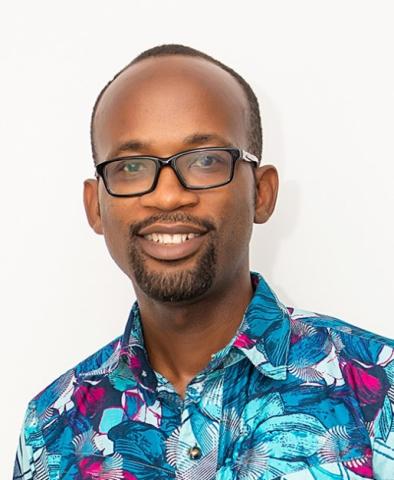
Senior Research Fellow
Philip-Neri Jayson-Quashigah (PhD) is a Senior Research Fellow at the Institute for Environment and Sanitation Studies (IESS), University of Ghana, and a recent visiting fellow at the Helmholtz-Zentrum Hereon in Germany (2024/2025). He holds a PhD in Marine Science, an MPhil in Environmental Science, and a BA in Geography and Resource Development with Information Studies, all from the University of Ghana.
His research spans coastal processes and climate change, vulnerability assessment and adaptation in deltaic regions, and the development of innovative monitoring tools. He has expertise in the application of remote sensing, GIS, UAV technology, and numerical modelling to environmental assessment and coastal management.
Philip-Neri has been involved in several projects, including SARTRAC (Teleconnected SARgassum Risks across the Atlantic), where he investigates the spread and impacts of invasive Sargassum along the West African coast, and the MANCOGA (Mangroves as Nature-based Solutions to Coastal Hazards in Eastern Ghana) project, which is exploring ecosystem-based approaches for coastal resilience.
He has published widely on shoreline evolution, coastal vulnerability and nature-based solutions and is committed to applied research that supports sustainable coastal management and resilience in West Africa and beyond.
Research Areas
- Coastal processes and nearshore dynamics: including shoreline change, wave dynamics, and erosion in deltaic and estuarine systems.
- Climate change, vulnerability, and adaptation: with a focus on sea level rise and community resilience in coastal and delta regions.
- Remote sensing, GIS, UAVs, and modelling: applying geospatial and numerical tools to environmental monitoring and management.
- Marine invasive species and early advisory system development: monitoring Sargassum blooms along the coast of Ghana (and West Africa), including a citizen science approach.
- Nature-based solutions for coastal resilience: exploring mangrove-based and ecosystem approaches for coastal protection.
Recent Publications
- Jayson-Quashigah, P-N., Staneva, J., Chen, W., Djath, B. (2025). Assessing the role of mangroves in shoreline stabilisation through a What-If modelling framework. Discover Applied Sciences. 7 (982). https://doi.org/10.1007/s42452-025-07623-9
- Angnuureng, B.D., Almar, R., Ondoa, G.A., Dada, O.A., Jayson-Quashigah, P-N., Anthony, E.J. et al. (2025). A West African coastal science trajectory of vulnerability, adaptability, and resilience. Discovery Sustainability, 6 (843). https://doi.org/10.1007/s43621-025-01772-y
- Fidai, Y. A., Dash, J., Tompkins, E., Atiglo, D. Y., Jayson-Quashigah, P.-N., Sowah, W. N. A., & Addo, K. A. (2025). Sargassum Biomass Movement and Proliferation in the Eastern Tropical Atlantic. Phycology, 5(2), 17. https://doi.org/10.3390/phycology5020017
- Jayson-Quashigah, P-N., Staneva, J., Chen, W., Djath, B., Mahu, E., Appeaning Addo, K. (2025). Evaluating mangroves as nature-based solutions for coastal protection under current and future sea level rise scenarios. Frontiers in Marine Science, 12:1526082. https://doi.org/10.3389/fmars.2025.1526082
- Amoako Johnson, F., Jayson-Quashigah, P-N., Hornby, D., Hill, C., Abu, M., Appeaning Addo, K., Nyarko, B.K., Codjoe, S.N.A., Tagoe, C.A., Hutton, C.W., & Padmadas, S. (2025). Mapping socio-environmentally vulnerable hotspots in the Volta Delta of Ghana. PLOS ONE, 20 (5) e0322453. https://doi.org/10.1371/journal.pone.0322453
- Sowah W.N.A., Jayson-Quashigah P.-N.M., Atiglo D.Y., Van Der Plank S., Almela V.D., Anderson R., Dash J., Tompkins E., Addo K.A. (2025). Unleashing Potential: Collaborative Research as a Catalyst for Capacity Building and Enhancement. Oceanography 38 (1), 77-78. https://doi.org/10.5670/oceanog.2025.112
- Avornyo, S. Y., Minderhoud, P. S. J., Teatini, P., Seeger, K., Hauser, L. T., Woillez, M. N., Jayson-Quashigah, P. N., Mahu, E., Kwame-Biney, M., & Appeaning Addo, K. (2024). The contribution of coastal land subsidence to potential sea-level rise impact in data-sparse settings: The case of Ghana's Volta delta. Quaternary Science Advances, 14, 100175. https://doi.org/10.1016/j.qsa.2024.100175
- van der Plank, S., Appeaning Addo, K., Anderson, R., Boruff, B., Bruce, E., Chambers, K., Duncan, J., Davies, K., Escoffery, D., Fidai, Y., Fletcher, D., Hickey, S., Jayson-Quashigah, P.-N., Maxam, A., Pauli, N., Schlenker, M., Sowah, W.NA., Dash, J. (2023). The ‘More Than Maps’ framework for building research capacity among young people in coastal climate change adaptation. Area, 56 (12). https://doi.org/10.1111/area.12919
- Fidai, Y.A., Botelho Machado, C., Dominguez Almela, V., Oxenford, H.A., Jayson-Quashigah, P.-N., Tonon, T., & Dash, J. (2024). Innovative spectral characterisation of beached pelagic sargassum towards remote estimation of biochemical and phenotypic properties. Science of The Total Environment, 914 (1), 169789. https://doi.org/10.1016/j.scitotenv.2023.169789
- Atiglo, D. Y., Jayson-Quashigah P.- N., Sowah, W.N.A., Tompkins, E.L., & Appeaning Addo, K. (2024). Misperception of drivers of risk alters willingness to adapt in the case of sargassum influxes in West Africa. Global Environmental Change, 84, 102779. https://doi.org/10.1016/j.gloenvcha.2023.102779
Teaching Programmes
- Human-Environment Interactions
- Focus on Communities
- Emerging Environmental Issues
- Environmental Management
- Sustainability of the Built Environment
Recent Research Projects
- Mangroves Ecosystems as a Nature-based Solution for Coastal Hazards in Eastern Ghana (MANCOGA). MANCOGA seeks to develop a co-design-led decision support system using mangroves as evidence-based NBS to reduce local GHG levels, improve coastal water quality, and mitigate erosion and flood risk along the Eastern coast of Ghana. CoDesign & Implementation Phases. University of Ghana and Helmholtz-Zentrum Hereon. MeerWissen Sponsored, 2022-2025. https://mancoga.com/
- Building youth-led citizen science expertise in remote Ghanaian coastal communities (SargSNAP). SargSNAP! aims to increase digital skills in remote coastal communities in Ghana through engaging schools in photography-based citizen-science, to empower these communities to be part of the study and decision-making in adaptation to climate change-driven risks such as sargassum invasion. University of Ghana and University of Southampton, UK. UKRI-ESRC Sponsored, 2022-2023.
- Teleconnected SARgassum risks across the Atlantic: building capacity for TRansformational Adaptation in the Caribbean and West Africa (SARTRAC) Project. University of Ghana, University of Southampton, University of the West Indies, and University of York. UKRI Sponsored, 2019-2023. https://sartrac.org/
- Building capacity to monitor and manage sargassum seaweed inundations in Western Africa (SARCAP). Our project will create and mobilise a cohort of sargassum champions in West Africa to address this new normal. The champions will train trainers across West Africa to monitor the distribution of Sargassum, identify species, provide basic knowledge of seaweed biology, and translate scientific data into information to enable value extraction from Sargassum. WUN RDF Sponsored, 2021-2022.
- Political Ecology of Vulnerability to SARGassum invasion in GHana: building community capacity for sustainable adaptation and resilience (PEVSARG-GH) (2022). The aim is to understand the political ecology of communities’ vulnerability to the impacts of sargassum beaching and to explore the community perspectives on how to attain equitable resilience. SARTRAC FIF, 2022.
- Sargassum Severity Mapping along the Western coast of Ghana (SarSEM). The project focuses on the mapping of historical sargassum beaching and assessing the sargassum morphotypes along the western coast of Ghana. SARTRAC FIF, 2021-2022.
- Managing Climate Change Adaptation at the Coast through More than Maps (More than Maps). More than Maps will strengthen the understanding and skills of secondary school students across Australia, the UK, Ghana, and Jamaica and empower them to make evidence-based contributions to adaptation discourse. UK/Australia Season Sponsored, 2021-2022.
- Beach dynamics through video monitoring to improve coastal management strategies in West Africa (BEACHMON) Project. The goal of this project is to use video technology to evaluate the interactions between nearshore forcing and coastal morphology of selected beaches to improve our understanding of coastal variability and anticipate its future evolution. University of Cape Coast and University of Ghana. National Geographic Society, 2018-2020. https://oceandata.ucc.edu.gh/
Selected Students Supervision
- Eugenia Borteley Badu (PhD, 2023/2024) ‘Coastal Erosion, Community Vulnerability and Nature-Based Solutions: An Integrated Study of a Coastal Community in Ghana’. (Principal Supervisor)
- Eugene Darko Atiemo (PhD, 2023/2024) ‘ Urban Expansion and Land Use Land Cover Change in the Akuapem (Co-Supervisor)
- Jacob Ofori- Tettey (Mphil, 2023/2024) ‘Saltwater Intrusion, Surface and Ground Water Contamination and its Implications on Food Security among Farmers in the Keta Lagoon Basin, Ghana’ (Principal Supervisor)
- Obed Omane Okyere (Mphil, 2021/2022) ‘Vulnerability assessment to coastal hazards within the Ada West of Ghana’ (Co-supervisor)
- Paul Adu (Mphil, 2021/2022) ‘ Using Unmanned Aerial Vehicle to Monitor Saragssum Beaching along the Western Coast of Ghana’ (Co-supervisor)